
Sauna Quality Built on a Defined Standard
Tylo saunas in Danbury for homeowners seeking a dedicated in-home wellness space with a credentialed product line
Residential properties in Danbury span a wide range of construction eras, and the homes built from the 1980s onward — particularly those with finished lower levels or dedicated bonus rooms — are well-suited to the spatial requirements of an in-home sauna installation. Hat City Pools brings Tylo saunas to Danbury, giving homeowners access to a Scandinavian brand that has been manufacturing sauna heaters and cabins for decades. Tylo's product line is built around consistent heater performance and cabin construction standards that reflect the Finnish sauna tradition, where the relationship between heater output, cabin volume, and bench layout is treated as a specific engineering problem rather than a decorative one.
Tylo saunas are designed for indoor, in-home installation. Their heaters are calibrated to heat specific cabin volumes efficiently, and the cabin materials — kiln-dried Nordic softwoods — are selected to perform at sustained operating temperatures without warping or emitting volatile compounds. Hat City Pools helps homeowners evaluate which Tylo model fits their available space, how the heater capacity maps to the room's cubic footage, and what preparatory work, if any, the installation space requires. This is a consultation-first process, not a showroom transaction.
Contact Hat City Pools to arrange a Tylo sauna consultation and review which models are appropriate for your home's layout and intended use.
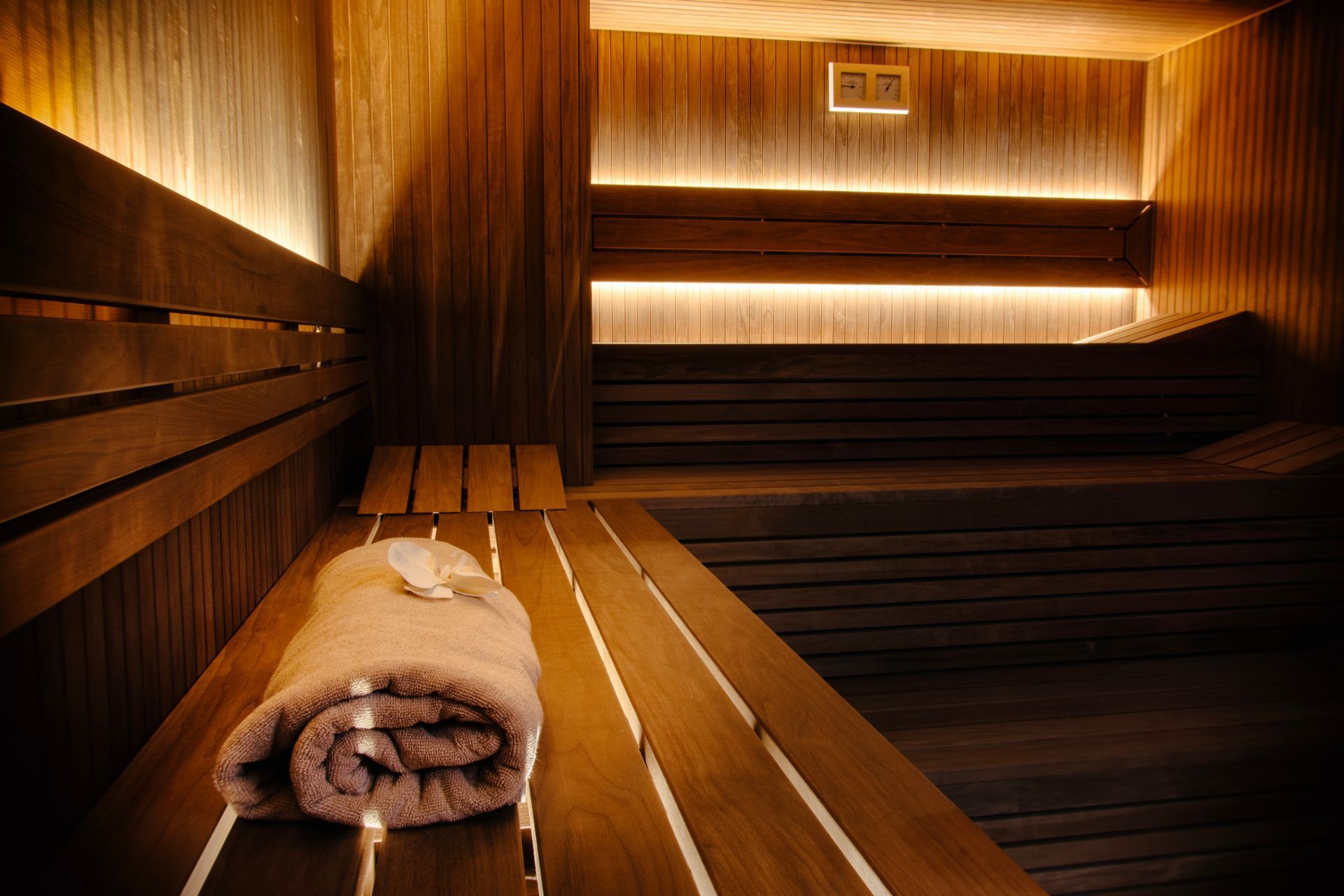
How Regular Sauna Use Supports a Wellness Routine
The case for regular sauna use is grounded in how heat stress interacts with the body's recovery and relaxation systems. A sauna session elevates core body temperature, which prompts increased circulation and muscle relaxation — effects that have made sauna bathing a routine part of wellness practice in Scandinavian cultures for generations. Tylo's product literature frames these sessions around four areas: relief from daily stress, support for tired or overworked muscles, promotion of relaxation, and deeper sleep when sessions are taken in the evening. These are the reported experiences of regular users, and they reflect what sauna use has traditionally been associated with, not outcomes that any single session guarantees.
After a session in a properly heated Tylo sauna, users typically notice that muscle tension — particularly in the back, shoulders, and legs — has released noticeably, and that the mental shift from active engagement to a calmer, quieter state happens more readily than it does through passive rest. The heat creates conditions where the body is doing specific physiological work, which is distinct from simply sitting quietly. For homeowners who use their sauna consistently as part of an evening routine, the wind-down effect on sleep is one of the most frequently reported observations.
Tylo offers both traditional Finnish sauna heaters and combination units, and their cabin configurations range from compact two-person models to larger family-size installations. The right fit depends on how many people will use the sauna regularly, how much space is available, and whether the priority is high-intensity heat sessions or a gentler, more extended session profile. Hat City Pools works through these variables with each homeowner before any model is selected.
What to Know Before Selecting a Tylo Sauna
These questions address how Tylo saunas are selected, configured, and used in a residential setting, based on the types of homes and installation conditions common in Danbury.
How does Tylo determine heater capacity for a specific cabin size?
Tylo heaters are rated in kilowatts and matched to cabin volume in cubic feet. A heater that is undersized for the cabin will struggle to reach operating temperature; one that is oversized will cycle on and off inefficiently. The consultation process at Hat City Pools includes calculating the cubic footage of the intended space so the heater-to-cabin ratio is correct before installation begins.
What makes Tylo cabin materials different from lower-cost alternatives?
ylo uses Nordic softwoods that are kiln-dried to specific moisture content levels before the cabin is assembled. This controls how the wood responds to repeated heat cycles — lower-quality materials that are not properly dried will develop cracks, gaps, and warping after a season of regular use, which affects both heat retention and the structural integrity of the door seal.
How should an evening sauna session be timed to support sleep?
The body's core temperature rises during the session and then drops as it cools after you exit. This post-session temperature drop signals the body toward sleep in a way that parallels its natural circadian cooling process. Most users find that ending a session 60 to 90 minutes before bed allows the cooling phase to complete naturally.
What is the warm-up time for a Tylo sauna, and how does that affect daily use?
Tylo heaters typically bring a properly sized cabin to operating temperature in 20 to 45 minutes depending on cabin volume and ambient room temperature. For homeowners integrating the sauna into a daily routine, this means planning a warm-up window before the session starts rather than expecting immediate use.
What maintenance does an in-home Tylo sauna require after installation?
The primary maintenance tasks are cleaning the bench and floor surfaces with a mild, non-chemical cleaner, checking the heater stones annually for cracking or displacement, and inspecting the door seal for compression loss. In Danbury homes where the sauna is installed in a basement, monitoring the ambient humidity of the surrounding room also prevents exterior cabinet moisture from accumulating.
Hat City Pools is located at 30 Federal Road in Danbury and serves homeowners looking to bring a Tylo sauna into their home. To begin the selection process, schedule a consultation to review your available space, your intended use, and the Tylo models that fit both.