
In-Home Sauna Installation Done Properly
In-home sauna installation in Danbury for homeowners ready to bring a dedicated wellness space inside their home
Installing an in-home sauna involves more than placing a prefabricated unit in a spare room. Hat City Pools handles the full scope of in-home sauna installation in Danbury, from evaluating the right room or space to selecting the sauna type that fits how the room will actually be used. The two primary formats — traditional Finnish-style heat and red light therapy saunas — operate on different principles and suit different routines, and the right choice depends on factors like available square footage, ventilation configuration, and how the space is already framed.
Many homes in the Danbury area, particularly those built in the 1970s through the 1990s, include finished basement spaces or bonus rooms with layouts that accommodate a sauna installation with minimal structural modification. Hat City Pools evaluates the existing conditions — electrical panel capacity, wall material, ceiling height, and airflow — before any unit is specified. Traditional saunas require proper venting and a heat-rated interior; red light therapy models have their own electrical draw requirements and are particularly sensitive to placement relative to seating distance. Both are available through Hat City Pools, and both are installed as interior, in-home units.
Arrange a home consultation with Hat City Pools to review the available space and determine which sauna configuration suits your home's layout.
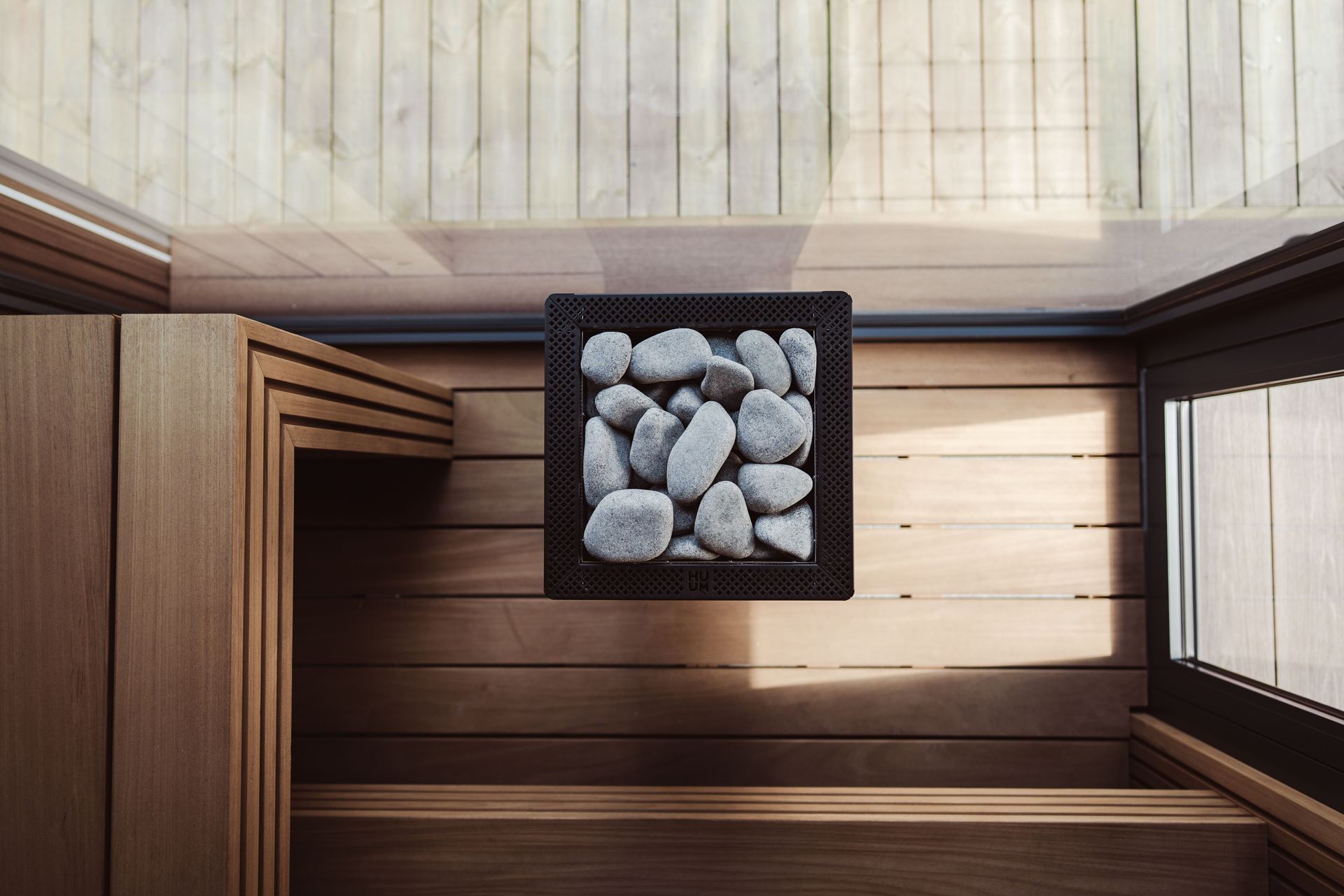
What Proper In-Home Sauna Installation Requires
A correctly installed in-home sauna begins with a room assessment that accounts for more than just dimensions. Ceiling height, the presence of plumbing or mechanical equipment in adjacent walls, flooring material beneath the unit, and the distance from the electrical sub-panel all factor into which unit can be installed without modification versus which requires preparatory work. Traditional saunas generate sustained radiant heat and require kiln-dried softwood interiors — typically cedar or hemlock — that will not warp or off-gas under operating temperatures. Red light therapy saunas function at lower ambient heat levels but require precise panel placement to maintain effective light wavelength exposure at seated distance.
Once the unit is placed and connected, the difference in the space is immediately apparent: the room gains a clearly defined, purpose-built area that operates independently from the home's general HVAC system. Hat City Pools offers Tylo saunas as part of their in-home sauna lineup — a Scandinavian brand with a long-standing reputation for heater quality and cabin construction. For homeowners interested in the full Tylo product range and what distinguishes it from other in-home options, see the Tylo Saunas page.
The type of flooring in the installation room matters more than most homeowners anticipate. Sauna units should not sit directly on carpet, and in older homes where subfloor leveling may be uneven, a moisture-resistant base layer is typically installed first to ensure the cabin sits plumb and the door seals correctly.
Common Questions About In-Home Sauna Installation
These questions address how in-home sauna installation works and what to expect from the process, based on the conditions common in residential properties in Danbury.
What is the difference between a traditional sauna and a red light therapy sauna?
A traditional sauna heats the air and surfaces in the cabin using a wood or electric heater, typically reaching temperatures between 150°F and 195°F, while a red light therapy sauna uses infrared panels to emit specific light wavelengths at lower ambient temperatures, generally between 110°F and 140°F. The choice affects installation requirements, electrical load, and how the session is experienced.
How much electrical capacity does an in-home sauna require?
Most traditional saunas require a dedicated 240-volt circuit, while some red light therapy models can operate on a standard 120-volt outlet depending on their panel configuration. Your home's panel capacity and the distance from the sauna location to the sub-panel are assessed during the consultation.
What room conditions make a space suitable for sauna installation?
Ceiling height of at least 7 feet, a non-carpeted or easily modified floor surface, and a wall configuration that allows for proper venting are the baseline requirements. Many finished basements in homes built after 1980 meet these conditions without significant modification.
How is the interior of a traditional sauna constructed, and why does wood species matter?
Traditional sauna cabins use kiln-dried softwoods — cedar is the most common because it resists warping, does not splinter when heated, and produces minimal resin. Hemlock is an alternative for those sensitive to cedar's natural scent. The wood species affects how the cabin holds heat and how the interior ages over time.
What should you check after the sauna installation is complete?
After installation, verify that the door closes and seals fully with no visible light gaps, that the heater reaches operating temperature within the expected warm-up window, and that the interior walls show no signs of uneven panel seating. A well-installed sauna unit should hold temperature consistently once it reaches its set point.
Hat City Pools works with homeowners in Danbury to identify the right sauna type and confirm that the installation space is properly prepared before the unit arrives. To start the process, schedule an in-home space review so the available room conditions can be evaluated against the specifications of the models that fit your layout.